Families create safety and security plans after a scare. Mine started after a yard barbeque where a young child choked on a grape. The daddy froze. The mom screamed. A next-door neighbor, a retired paramedic, stepped in with tranquil hands and a straightforward strategy that got rid of the air passage before the initial siren wailed. The youngster was fine. The lesson stuck. Plans matter, and method sits at the heart https://finnufwv217.cavandoragh.org/grasping-emergencies-why-a-first-aid-course-is-crucial-for-everybody of any kind of strategy that works.
A family safety strategy is more than emergency contact number on the fridge. It is a living structure for what your family does when the regular breaks, from a sprained ankle joint on a route to chest pain in the middle of the night. First aid training and a CPR course support that structure, transforming fear right into a useful sequence of activities. When a person in the family members understands how to evaluate, act, and hand off to specialists, mins become significant. Those minutes can conserve lives or limitation long‑term harm.
The function of first aid in an actual family plan
When I build or change a household safety and security prepare for customers, I start with their more than likely risks, not headline calamities. Families with kids bother with choking and kitchen area burns. Teenagers bring sports injuries, allergic reactions, and periodically bad choices around water. Older adults introduce cardiac risk, medication communications, and falls. Family pets include their own quirks. Geography matters also. Country households encounter longer ambulance times. City apartment or condos commonly have quick accessibility to help, however challenging discharge paths.
First aid training equates these patterns into action. It instructs you exactly how to identify an emergency, prioritize, and prevent making points worse. That last piece gets much less focus than it should have. Understanding when not to move somebody with a suspected back injury, or when to prevent food or beverage after head trauma, typically stops secondary harm. The training additionally provides the boss a consistent voice. In a worried room, calm instructions bring weight, which solidity spreads.
Well constructed strategies are straightforward under stress and anxiety. You desire three or four actions that everyone can remember. That is where first aid and CPR training, whether from a recreation center or a service provider like First Aid Pro, fits in. The best first aid courses instruct a psychological list, so your brain reaches for a pattern, not panic.
The core abilities every home ought to cover
Not all first aid courses are equivalent, and not every ability applies to every family members. Begin with fundamentals that go across scenarios and age groups.
Airway and breathing. Choking, bronchial asthma attacks, an opioid overdose, and drowning share a common string. You require to understand how to keep air moving. A solid first aid and CPR course will show you how to assess breathing, clear a moderate obstruction with cough training, and react to a severe obstruction with back impacts and stomach embed adults and youngsters. It will also cover infant modifications, where you use back puts and upper body thrusts instead of abdominal stress. If a person in the home takes opioids or you host events where blending important could occur, include naloxone training. Several regions allow laypeople to carry and provide it.
CPR and AED usage. Heart attack resembles abrupt collapse, no typical breathing, and no response to voice or touch. In those very first couple of minutes, the chance of survival rests on high‑quality upper body compressions and early defibrillation. A CPR course that includes AED training gives you a confident regimen: call for aid, start compressions at the ideal deepness and rate, button rescuers every two minutes ideally, and use the AED pads as quickly as they get here. If your building or club has an AED, find out where it is and exactly how to access it after hours. Technique opening up the cupboard and transforming it on. Machines differ more than you think.
Bleeding control. Severe bleeding comes to be harmful faster than people expect. First aid training need to cover straight pressure with gloved hands and towel, wound packing for deep bleeds, and the safe use of business tourniquets. Homes that work with power tools, keep animals, or hang around searching https://rowanxlua576.iamarrows.com/choosing-the-right-cpr-courses-a-complete-buyer-s-guide or backcountry walking should absolutely practice tourniquet placement on limbs. Maintain a tourniquet in the family first aid kit and shop an additional in the car. Secs count when you are far from help.
Allergic reactions and anaphylaxis. If anybody in your family lugs an epinephrine auto‑injector, ensure a minimum of two grownups and any type of older kids understand when and just how to use it. First aid and CPR courses often touch this skill, but a short refresher course from the prescribing clinician helps. The pattern to discover is recognition of multi‑system participation, use of epinephrine early, and instant contact us to emergency situation solutions, even if signs improve.
Head, neck, and spinal column evaluation. Most falls are minor. A few are not. A first aid course will teach warnings, like loss of awareness, repeated throwing up, severe migraine, or neurologic changes. It likewise covers easy assistance and immobilization while you wait on help. This is not about playing paramedic. It is about not making injuries worse until the experts arrive.
Burns and scalds. Families take too lightly how rapidly burns happen around kettles and ovens, and how much damages a warm drink can do to a young child's skin. Training assists you remember to cool the burn under running water for as much as twenty mins, eliminate jewelry, prevent ice, and cover with a tidy, non‑fluffy clothing. Recognizing when to look for professional care matters also. Chemical and electric burns need immediate analysis, regardless of exactly how minor they look.
Medical emergencies. Asthma, diabetic issues, seizures, and stroke present in a different way, but the framework continues to be: examine responsiveness, breathing, and circulation, call for aid early, provide encouraging measures within your training, and avoid unsafe bad moves. A stroke recognition tool, like quick, belongs in everyone's memory. So does the calm act of turning someone recuperating from a seizure onto their side and watching their breathing until they are totally awake.
Choosing the right first aid course and CPR training
I see families enroll in the wrong course regularly. They pick the fastest, most inexpensive choice, obtain a card, and discover later that vital topics were missing. You will certainly do far better if you connect your goals to the offering.
If you take care of babies and children, look for first aid and CPR courses that especially cover pediatric abilities. Infant choking response and baby CPR vary from grown-up methods. Child care service providers and foster moms and dads frequently require a certain first aid certificate, so confirm the name and degree your company recognizes.
If your workplace needs accreditation, speak with your safety policeman or HR. They typically have a list of accepted programs and revival intervals. Choose a course that satisfies both job regulations and home requirements if possible. By doing this you maintain abilities existing with one renewal cycle.
If your schedule is tight, a blended style works well. Many companies, including programs like First Aid Pro and similar organizations, run on-line theory with an in‑person useful. The hands‑on session matters. Enjoying compressions on a display is not the same as feeling the springtime of a manikin and finding the appropriate rhythm.
If you already hold a card but feel rustic, take a CPR correspondence course yearly and a complete first aid course every two to three years. Proof evolves. So do guidelines on compression ratios, hemorrhaging control strategies, and shock management. Also the language changes, which influences how comfortably you can trainer an untrained assistant throughout an emergency.
If you plan to serve as the family factor individual, choose a course that permits added technique time. Ask the trainer to stay a couple of mins after the session for concerns. Excellent instructors welcome real‑world circumstances. Raise your youngster's asthma background, your elderly papa's blood slimmers, or your split‑level residence with slim staircases. Equate theory right into your floor plan.
Putting training right into the household security plan
A plan that lives only in your head will certainly fall short precisely when you need it. Create a concise safety document and maintain it short sufficient to check out in under two minutes. Connect lists and maps as appendices if valuable. The majority of households can cover the fundamentals on a solitary page and a shared folder on the cloud for details.
Start with functions. Choose that calls emergency situation solutions, that retrieves the first aid kit and AED if readily available, who meets -responders at the door, and that collects children or pet dogs in a safe space. In tiny homes a single person will put on numerous hats. That is fine. Clarity beats complexity.
Note medical backgrounds and special factors to consider. Checklist allergic reactions, normal medications, and chronic conditions for each family member. Consist of locations of inhalers, epinephrine auto‑injectors, sugar gel, or naloxone. If a teen keeps an inhaler in a backpack, write that down. Throughout an emergency you want to reach for the ideal bag without thinking.
Map your home. Attract a simple layout with departures, the major electrical panel, gas shutoff, first aid kit, and fire extinguishers. Label areas with simple terms that match what you claim in every day life. If your family calls the den the back space, write back area on the map. Precision helps when you are offering directions to a -responder over the phone.
Pick key and second conference points outside the home, and describe the route to get there. Select areas that maintain you out of -responders' method. The far walkway across the street is far better than the driveway beside the engine bay.
Plan interaction. Shop emergency situation numbers in every phone under clear labels. Instruct children how to call from secured displays and just how to provide your address. If you live Epping first aid in a building with several entries, jot down the very best accessibility for emergency situation staffs. It saves mins when they do not have to backtrack.

Practice two times a year. Utilize a weekend early morning. Go through a situation for fifteen minutes. One month act you find a cooking area fire and leave the apartment. Another month mimic a collapsing episode and have a teen technique the emergency situation call script while an additional person does a key analysis. Maintain it light, and maintain it real.
Building and keeping the right first aid kit
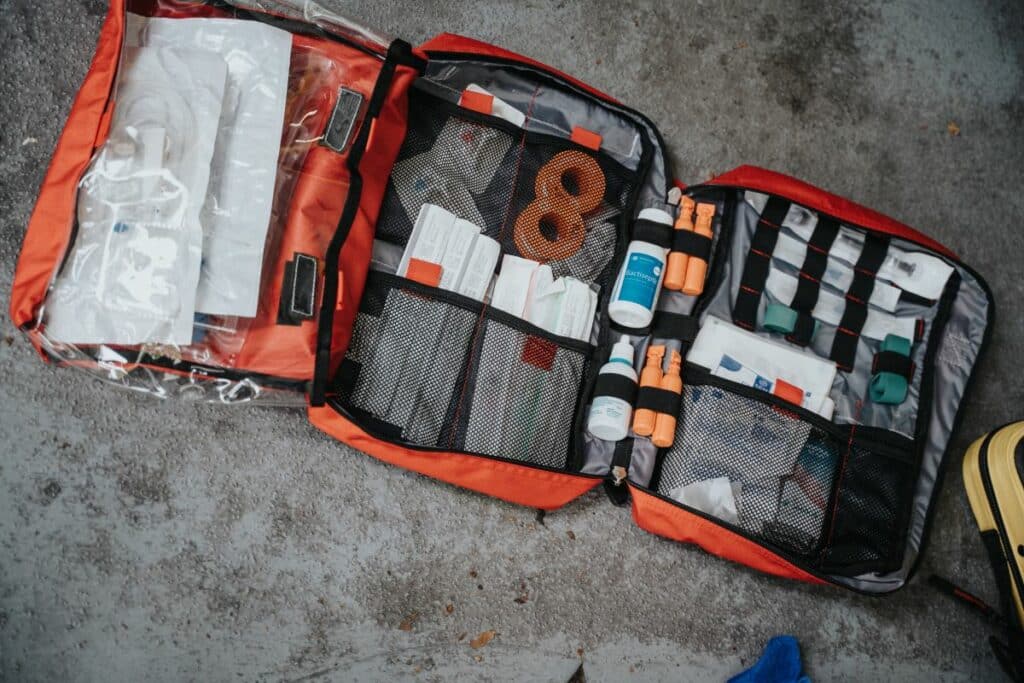
A package is a tool, not an amulet. Off‑the‑shelf kits differ from outstanding to worthless. I choose a custom construct with components you have really handled in a first aid course. Go for two packages, one larger at home and a portable variation in the cars and truck or daypack. Store packages where you can reach them without relocating furniture.
For a family members set, I prioritize gloves, trauma shears, assorted sterile dressings, conforming bandages, adhesive bandages, medical tape, saline for eye watering, an electronic thermometer, instantaneous ice bags, tweezers, a tourniquet, hemostatic gauze, triangular plasters, a CPR face shield or pocket mask, and an emergency situation blanket. Then include personal medicines and matches of vital tools like an inhaler spacer.
Label pouches clearly. When a neighbor runs to grab the tourniquet, they need to not need to open six zip bags to discover it. Color coding assists. Red for hemorrhaging, blue for breathing, eco-friendly for comfort materials. You can purchase modular organizers or repurpose resilient pouches.
Check your set monthly the first few months, then quarterly. Consumables move. Batteries pass away in flashlights. Sticky breaks down in warmth. Revolve supply much like kitchen food. If you use something, replace it that day. Maintain a simple spread sheet in your shared household folder with quantities and expiry dates. It takes 5 mins to upgrade and saves you from surprises when you need the gear.
The CPR and AED space at home and in the neighborhood
Most heart attacks occur at home. Yet most AEDs live in workplaces, gyms, and shopping malls. That inequality is worthy of interest. You can not install an AED in every living-room, yet you can map the closest systems in your area. Many neighborhoods list AED areas online. Some building managers will certainly mount one in the entrance hall if citizens ask and provide to host CPR training onsite. I have seen apartment associations pool funds to get an AED, mount it in a typical corridor, and hold twice‑yearly CPR training for citizens. That is a sensible solution to an actual gap.
If you trainer young people sports, push to maintain an AED field‑side and to educate all instructors, not just the head trainer. Sudden heart attack in teenager athletes is rare yet not no, and adult spectators go to danger as well. Quick defibrillation inside the very first couple of minutes transforms the probabilities from grim to survivable. If your organization rotates fields, make a laminated card that notes the closest AED at each venue and tape it inside the devices bag.
Adults, kids, and method that sticks
You find out CPR and first aid with your hands as long as your head. Skills decay quickly when they remain on a rack. Adults neglect compression deepness and the steps of making use of an auto‑injector. Teenagers lose the cadence of the 30 to 2 cycle and the feel of a proper head tilt. Strategy brief refresher courses. Ten minutes on a manikin around the table two times a year helps greater than a marathon program every five years.
Kids deserve their own track. Kids as young as 7 can learn to recognize an emergency, telephone call for aid, and bring an adult the first aid kit. By 9 or 10, a lot of can be educated to put somebody in the healing position and to fetch and turn over an AED. Teenagers can finish a first aid and CPR course, gain a first aid certificate, and end up being real partners in the family members plan. I have actually enjoyed fourteen‑year‑olds manage an asthma flare smoothly because they exercised with a spacer and inhaler while a sibling role‑played distress.
Make method lively when you can. Transform the recuperation position into a timed puzzle. Conceal the first aid set and have children discover it with verbal ideas simulating a phone call. Role‑play a 000, 911, or 112 phone call, and button sides so everyone attempts both customer and dispatcher. The mind holds onto memories identified with emotion and novelty.
Integrating unique situations and intricate households
Not every house fits a clean mold. Grandparents check out for months at once. University youngsters return with new medicines. A moms and dad works nights, and the other adult manages dinner thrill and research marathons alone. Mixed households handle different addresses. The strategy must flex.
If language obstacles exist, write a quick emergency card in the recommended language and in the neighborhood emergency language. Maintain it by the landline and on the fridge. Include the address in both scripts. I have actually seen -responders battle to recognize a worried caller. Reviewing a ready line in the emergency language, even imperfectly, gets rid of confusion fast.
If somebody in the family has flexibility challenges, plan discharges with their gadgets. Practice relocating a mobility device down a stair with a next-door neighbor's aid. Test whether the smoke detector's strobe alternative wakes a hard‑of‑hearing member of the family. Think about bed shakers that connect into alarm system systems.
If your household stores firearms, integrate secure storage right into the plan. Throughout an emergency, -responders may get in rapidly. Locking treatments need to be easy and consistent. If you carry on your individual, make a decision in advance how you will certainly safeguard the weapon before responders arrive, and technique that choreography. Quality shields everyone.

If you share wardship, sync strategies throughout homes. Settle on meeting points, meds storage space, and which moms and dad updates the shared medical sheet. Emergencies do not regard calendars. Neither needs to your preparation.
When training meets the unpleasant genuine world
Textbook cases are neat. Life is not. Anticipate partial details, loud spaces, and clashing opinions. An excellent first aid course prepares you to take a breath, check the scene, and sequence your actions. It also prepares you to stay within your training. You can do a whole lot without entering invasive territory.
I have actually stood in kitchen areas where a well‑meaning family member wanted to offer a passing out person orange juice before we had actually checked their respiratory tract and pulse. I have actually seen a coach hesitate to use a teammate's epinephrine auto‑injector since the bundle stated prescription. Training offers you the self-confidence to state, this pattern fits anaphylaxis, use the pen now, after that call emergency services. It additionally assists you state no. No, we are not driving them ourselves throughout community with aggravating chest discomfort. No, we are not putting butter on a burn.
Expect bystanders to film. It is the period we live in. Assign a person to handle the crowd if you can. Ask them to clear room, maintain doors open up for -responders, and overview member of the family who are stressing to a chair with a glass of water. Offer simple, straight tasks. Idle worry feeds turmoil. Helpful work produce a bubble of order.
Keeping documents and measuring readiness
A plan grows when you treat it like maintenance, not a one‑off. After any kind of event, debrief. What went well. What obstructed. Did the emergency telephone call link promptly. Did any individual freeze since they were unsure of their duty. Did the first aid set open conveniently or take off right into a confetti of gauze.
Update your documents. If you transformed an inhaler brand name, replace the image in the strategy so a babysitter gets the appropriate one. If your phone number transformed or your structure set up a brand-new entrance code, repair it all over. Share updates with caretakers, grandparents, and regular sitters. I maintain a straightforward modification log at the end of a household plan. Day, change, initials.
Use renewal days as supports. Put CPR training expiries, first aid certificate renewals, and AED battery substitute days in the family members schedule with pointers 60 and thirty day out. The mild push maintains small jobs from coming to be large gaps.
Choosing reliable training and staying clear of red flags
Reputation matters. A solid first aid course balances evidence and use. Seek programs that follow existing standards from acknowledged resuscitation councils, that allot generous time for hands‑on practice, which employ instructors with current field experience or trustworthy training backgrounds. Great teachers welcome concerns, accept modifications when evidence shifts, and maintain scenarios grounded.
Be skeptical of courses that assure certification in impossibly short windows without useful components, that miss AED use, or that still teach strategies that have actually befalled of support. As an example, regular altitude for bleeding control without straight pressure is dated, and so is long term checking for breathing before starting compressions. A program should also attend to local facts. Urban apartments, rural roadways, and seaside neighborhoods each bring unique challenges.
For families who desire open enrollment and flexible organizing, companies like First Aid Pro and their peers often run weekend break and night sessions. Shop with a couple of inquiries. Inquire about course size caps, manikin to trainee ratios, mixed alternatives, and whether they include pediatric web content by default or as an add‑on. If you require a CPR correspondence course just, validate whether the session meets the demands of your office or sporting activity organization so you do not duplicate effort later.
A short, sensible drill you can run this week
- Pick a circumstance that matches your highest house danger, such as choking throughout dinner or an autumn on the stairs. Set a 15‑minute timer. Assign functions. Run the event in genuine time, including the emergency telephone call script, bring the first aid package, and leading responders to the door. Debrief for five minutes. Jot down something to fix, one point to practice once again, and one product to add or replace in the kit.
One drill defeats a lots intents. A lot of households discover tiny rubbings, like a secured stairwell door or a kit stashed behind a toolbox, that they can repair in an afternoon.
Why first aid and CPR belong in the society of the home
Skills change exactly how a family moves with the globe. A child who watches a moms and dad practice tranquil actions learns that emergencies are issues, not revelations. A partner who has done upper body compressions on a manikin knows what 100 to 120 per minute feels like and will not be reluctant if you collapse. Grandparents who practice their medicine listing and keep it on a budget card will hand a paramedic what they need in ten seconds, not ten minutes.
Training additionally shows boundaries. You discover to ask for specialist aid fast, to hand off cleanly when they show up, and to leave advanced interventions to those with the gear and the permit. That respect maintains scenes more secure and care much better coordinated.
The grape that triggered our barbecue scare became a staple example in my neighborhood courses. We exercise with cut grapes for kids, we practice the hand positioning for abdominal drives, we practice the move of a tranquil voice over a group. With each repetition, what felt like luck turns into repeatable skill.
First aid, CPR, and a thoughtful strategy weaved together. If you take a first aid course that fits your family, revitalize your CPR training on a normal rhythm, keep your kit stocked with devices you can really use, and pierce a few times a year, your family will not be best. You will certainly be ready enough, which is what counts when the air goes slim and the secs stretch.